Pancasila as Method
Why 1 June Still Matters Beyond Ceremony

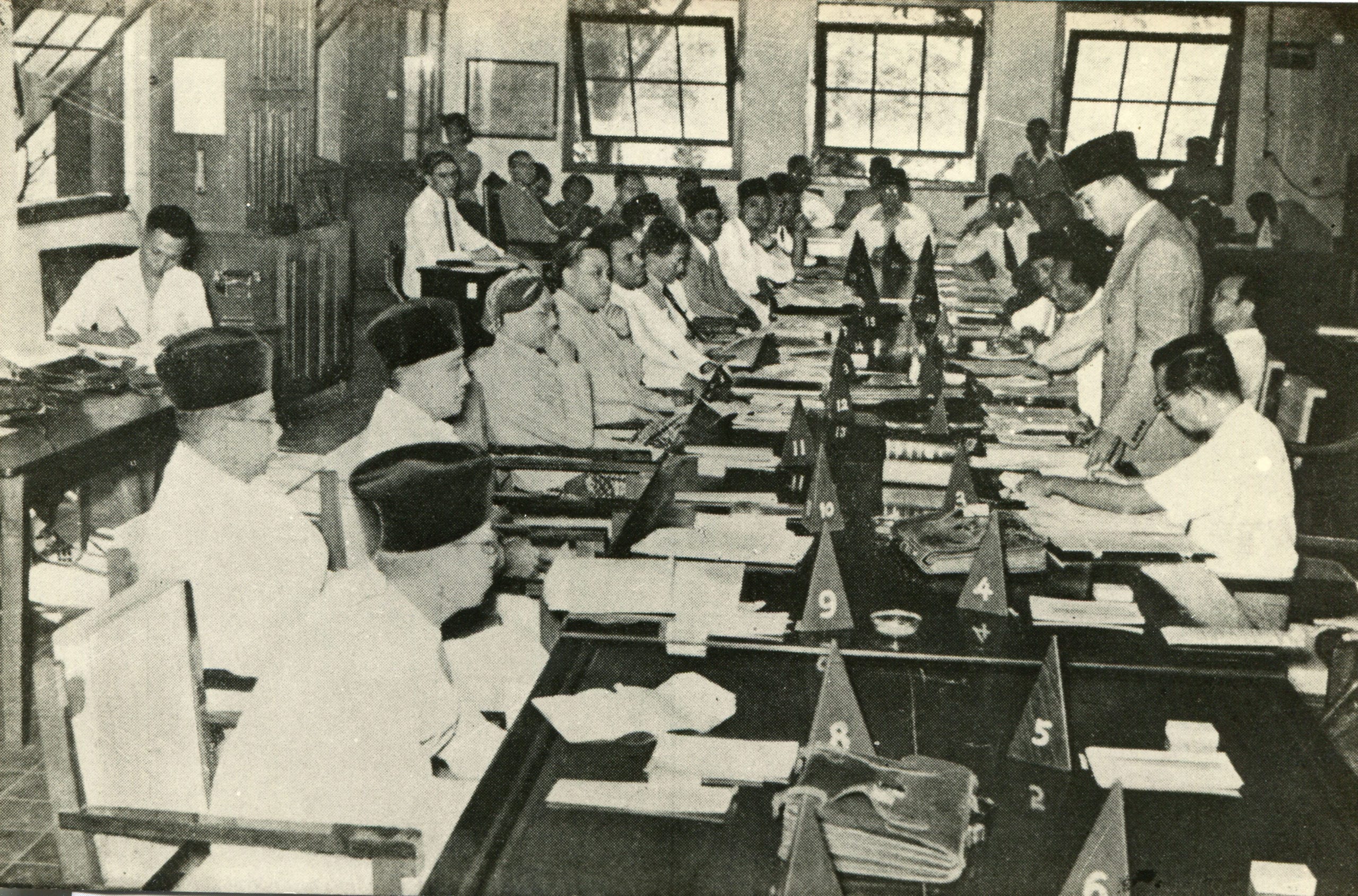
Commemorating 1 June as the birth of Pancasila was an important move. It returned us, at least potentially, to the moment of its formulation: Sukarno’s speech before the BPUPK in 1945. This matters because it shifts attention away from Pancasila as a list of five principles recited in flag ceremonies and back toward the original text, a vibrant, nuanced, argumentative, and stirring speech. What we find there is very different from the military-style recitation that has come to stand in for Pancasila in our public life.
Sukarno’s speech of 1 June 1945 was not a ritual text. It was not a sermon on obedience. It was not a manual for state-sponsored morality. It was an intervention in a moment of danger. The old order was collapsing, the new one had not yet been born, and the people who were asked to imagine independence were still surrounded by the habits, fears, and hierarchies of colonial rule.
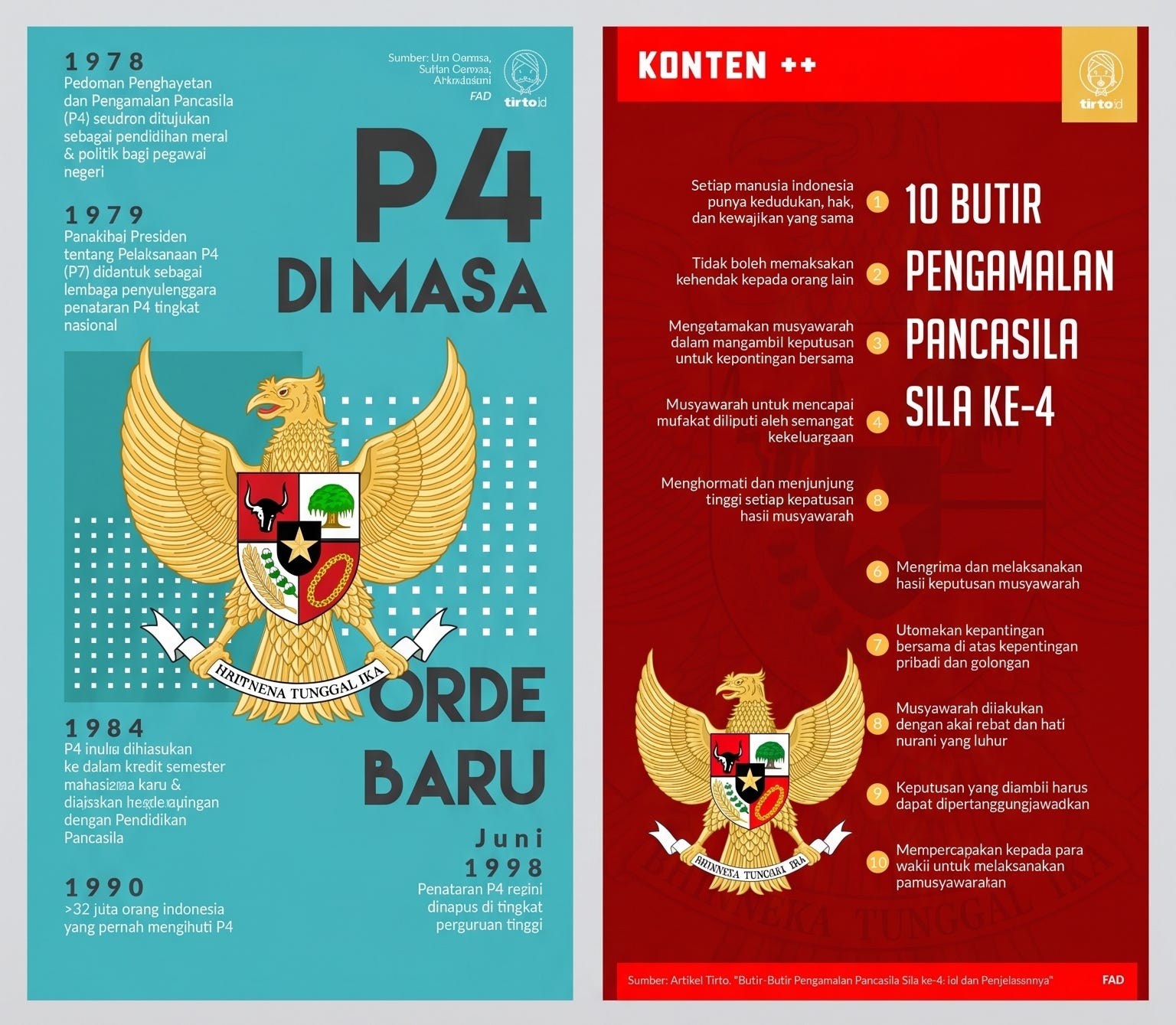
That is why the speech must be read again today. Not because we lack official references to Pancasila, but because we have too many of them. For decades, Pancasila was formalized, sacralized, and eventually fossilized. Under the New Order, it was removed from the field of struggle and placed inside the machinery of discipline. It became a test of loyalty, a language of control, a state monopoly over truth. Citizens were not invited to think with Pancasila; they were instructed to submit to its authorized interpretation.
This was a profound reversal. A method born from anti-colonial liberation was turned into an instrument for narrowing political possibility. A language meant to unite a diverse people in the work of freedom was used to silence difference. A principle of semua buat semua, all for all, was made compatible with a system in which the republic increasingly served the few.
To revisit Pancasila today, then, is not to polish an old monument. It is to recover a method.
The first thing to notice in Sukarno’s speech is his impatience. He is impatient with hesitation, with excessive calculation, with the habit of postponing freedom until every condition is perfect. Independence, he says, is a jembatan emas, a golden bridge. A bridge is not a destination. It is a passage. We do not wait to become complete before crossing it. We cross it because only on the other side can we begin the work of becoming complete.
This is one of the most radical arguments in the speech. Colonialism always teaches the colonized that they are not ready: not educated enough, not orderly enough, not healthy enough, not mature enough, not united enough. Power always has its own version of this lesson. It tells people to wait, to be realistic, to leave serious matters to those who understand the machinery of government. Sukarno rejected this pedagogy of fear. He said, in effect, the people become capable by acting as a people.
Pancasila is born from that refusal. It is not a doctrine of passivity. It is a method for turning scattered grievance into collective direction.
The second movement of the speech is equally important. After arguing that independence must not be postponed, Sukarno asks what kind of state is to be founded. Is Indonesia to be made for one person, one class, one religious group, one aristocracy, or one wealthy minority? His answer is uncompromising: no. Indonesia must be semua buat semua.
This is not a decorative phrase. It is the test Sukarno places before the republic. A state can call itself national, democratic, religious, and constitutional; it can recite the five principles endlessly; it can fill public life with the language of Pancasila. But the decisive question remains: who is the republic actually organized to serve?
This is where the problem today becomes clear. Pancasila has not disappeared from public life. It is visible everywhere, in ceremonies, speeches, slogans, regulations, and official instruction. What has too often disappeared is its method. The language remains, but it is made to accompany practices that move in the opposite direction: selective law, office that becomes a path to accumulation, development that dispossesses, elections that mobilize citizens without empowering them, and religion that divides the people rather than deepening solidarity.
This is not forgetfulness. It is deformation. Pancasila is not simply ignored; it is invoked while its organizing principle is reversed. The republic is made to speak the language of the many while serving the interests of the few. Seen from this angle, corruption, inequality, intolerance, ecological destruction, and democratic decline are not separate problems. They are different expressions of the same condition: the capture of the republic.
The unfinished task of Pancasila today is therefore to reclaim the republic from capture so that the state, economy, law, and public life are once again organized around the many, not the few.
This task cannot be left to those who benefit from the present arrangement. Nor can it be imagined only as a struggle outside the state. There are many Indonesians beyond the corridors of power who still believe that public life must serve the common good. There are also many inside institutions—teachers, civil servants, village officials, judges, police officers, soldiers, auditors, and administrators—who know that something has gone wrong but are told that loyalty means silence. For them, Pancasila can again become a language of orientation. Not a slogan of obedience, but a compass for action.
Read closely, each principle in Sukarno’s speech gives us such a compass.
Kebangsaan is not the worship of the state. It is the making of a people across islands, languages, memories, and wounds. But Sukarno immediately warned against chauvinism. Nationalism must not become arrogance. Today, this means that love of Indonesia cannot be used to silence criticism or exclude minorities. The republic is not defended by protecting power from the people. It is defended by protecting the people from domination.
Perikemanusiaan places the nation inside a wider moral world. It reminds us that Indonesia’s freedom loses meaning when it becomes indifferent to the suffering of others, including those displaced by development, those criminalized for defending land, and those marked as outsiders in their own country. Humanity is not an ornament added to nationalism. It is what prevents nationalism from decaying into cruelty.
Permusyawaratan is not elite consensus behind closed doors. Sukarno imagined democracy as a living arena of argument, persuasion, and struggle. A representative body, for him, should be alive with contestation. Democracy dies not only when elections disappear but also when citizens are reduced to spectators, when deliberation is replaced by transaction, and when disagreement is treated as disorder. Pancasila as method demands the courage to speak, to organize, to deliberate, and to refuse the lie that stability requires public silence.
Keadilan sosial is the sharp edge of the speech. Sukarno rejected political democracy without economic democracy. The right to vote is hollow if people remain disposable at work, insecure on their land, powerless before capital, or excluded from the wealth produced around them. Social justice is not charity. It is the test of whether freedom has entered everyday life.
Ketuhanan, finally, is not religious domination. Sukarno spoke of Ketuhanan yang berkebudayaan: a divine principle practiced with civility, humility, and respect. Faith that humiliates others is not a foundation for the republic. Faith that protects dignity, restrains power, and deepens solidarity is.
Sukarno then compressed the five principles into one word: gotong royong. This is often softened into nostalgia, as if it meant friendliness or village harmony. In the speech, it means something harder: shared labor, shared burden, shared responsibility. It asks who works and who benefits, who sacrifices and who accumulates, who decides and who is decided for.
That is why gotong royong is dangerous to any captured republic. It exposes arrangements in which the many carry the burden while the few take the harvest.
The work before us is to make Pancasila common sense again, not as indoctrination, but as a way of seeing. A common sense that recognizes capture when it hides behind legality. A common sense that distinguishes order from justice, nationalism from the protection of rulers, religion from the domination of others, development from dispossession, and democracy from periodic consent without power.
Sukarno ended his speech by reminding his listeners that no worldview becomes real by itself. It must be struggled for. That warning speaks to us as much as to the generation of 1945.
Pancasila will not return through ceremony. It will return when citizens use it to judge power, to organize courage, to protect one another, and to rebuild the republic as semua buat semua. The golden bridge was crossed in 1945. But the road beyond it remains unfinished.
This is such an important article. I have only known Pancasila-the-fossil, and I love being introduced to Pancasila-the-golden-bridge, a hopeful process toward an open-ended and generous vision based on love of the people rather than love of power. Thank you for these thoughts.
For so long, we have been forced to view Pancasila like an antique in a glass cabinet something to be guarded, revered, and defended, yet never touched, let alone put to work.
The moment we flip that perspective and treat it as a scalpel an analytical tool Pancasila transforms from a passive object into an active, sharp subject.
The shift is profound. Pancasila ceases to be a tool wielded by the ruling class to discipline critical citizens, instead, it becomes a tool owned by the people to demand justice from the state.